If you have been looking at nurseries for your child, you will have come across the term EYFS. It appears on nursery websites, in Ofsted reports, and in conversations with nursery managers — but what does it actually mean, and why should you care?
The Early Years Foundation Stage (EYFS) is the framework that shapes everything your child learns and experiences at nursery. It covers children from birth to age 5 and sets out what nurseries must do to keep children safe, support their development, and prepare them for school. Understanding the EYFS framework is one of the most useful things you can do when choosing a nursery, because it helps you recognise quality provision and ask the right questions.
This guide breaks down the EYFS in plain English — what it covers, how nurseries use it, and what it means for your child day to day.
What is EYFS?
The Early Years Foundation Stage is a statutory framework published by the Department for Education. It applies to every Ofsted-registered childcare provider in England — nurseries, preschools, childminders, and school reception classes.
The EYFS sets out:
- Learning and development requirements — the seven areas of learning every child should experience, and the early learning goals they are working towards by age 5
- Assessment — how practitioners observe, track, and report on each child’s progress
- Safeguarding and welfare requirements — staff qualifications, ratios, health and safety, behaviour management, and child protection
Think of it as the national standard for what “good early years care and education” looks like. When Ofsted inspects a nursery, they are checking how well it delivers the EYFS. When a nursery manager talks about their curriculum, they are describing how they bring the EYFS to life. You can read more about what inspectors look for in our guide to Ofsted ratings explained.
The current framework was last updated in September 2021, with a focus on simplifying the curriculum, strengthening early language development, and reducing paperwork for practitioners so they can spend more time with children.
The 7 areas of learning in EYFS
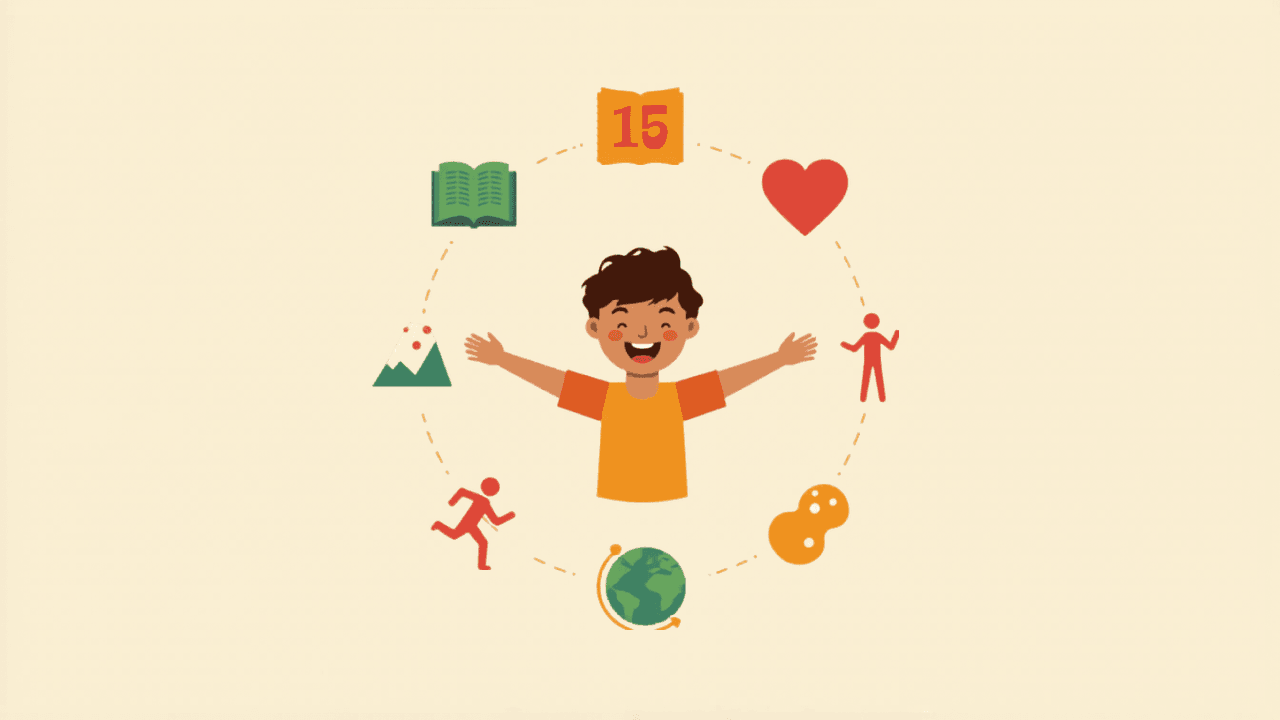
The heart of the EYFS is its seven areas of learning. These are divided into three prime areas (the essential building blocks) and four specific areas (broader skills that build on the prime foundations).
Prime areas
These three areas are considered the most important, especially for babies and toddlers. They underpin all other learning.
1. Communication and Language
This covers listening, understanding, and speaking. Nurseries support this through storytelling, singing, conversations during play, and creating a language-rich environment. Staff will narrate what they are doing (“I’m pouring the water into the cup — splash!”), ask open-ended questions, and introduce new vocabulary in context.
Why it matters: strong communication skills at age 5 are one of the best predictors of later academic success.
2. Physical Development
This includes both gross motor skills (running, climbing, jumping, balancing) and fine motor skills (holding a pencil, using scissors, doing up buttons). Nurseries provide opportunities for active play indoors and outdoors, as well as activities that develop hand strength and coordination.
The EYFS also includes healthy eating, self-care (learning to use the toilet, wash hands, put on shoes), and understanding the importance of physical activity.
3. Personal, Social and Emotional Development (PSED)
This area covers building relationships, managing emotions, developing confidence, and learning to share and take turns. It is the foundation for everything else — a child who feels secure, confident, and able to manage their feelings will be better placed to learn.
Nurseries support PSED by creating a warm “key person” relationship for each child, helping children name and talk about their feelings, modelling positive behaviour, and providing consistent routines that help children feel safe.
Specific areas
These four areas build on the prime areas and provide breadth to children’s learning.
4. Literacy
Early literacy in the EYFS is not about formal reading and writing lessons. It is about developing a love of books, recognising that print carries meaning, hearing and playing with sounds (phonics), and making marks that gradually become recognisable letters. Nurseries read stories daily, encourage “writing” in role play (e.g., making a shopping list), and introduce letter sounds through games and songs.
5. Mathematics
Again, this is not worksheets. EYFS mathematics is about understanding numbers, counting, patterns, shapes, and spatial awareness through hands-on play. Sorting objects by colour, building towers, counting snacks at snack time, singing number songs, and exploring shapes in the environment are all EYFS maths activities.
6. Understanding the World
This area covers early science, history, geography, and technology. Children explore the natural world (growing seeds, observing minibeasts), learn about their own community and other cultures, use simple technology (cameras, tablets, programmable toys), and talk about past events and changes over time.
7. Expressive Arts and Design
This includes art, music, dance, role play, and imaginative play. Children paint, draw, sculpt with playdough, dress up, create stories, sing, dance, and explore musical instruments. The focus is on the process of creating and expressing ideas, not on producing a “perfect” end product.
How the areas work together
The seven areas are not taught in isolation. A single nursery activity might touch several areas at once. For example, a group of children building a den outdoors involves:
- Physical development — lifting, carrying, balancing
- Communication and language — negotiating, describing, questioning
- PSED — sharing, cooperating, managing frustration
- Mathematics — estimating sizes, counting materials
- Understanding the world — problem-solving, exploring materials
Good nurseries plan activities that weave the areas together naturally, rather than ticking each one off as a separate box.
How nurseries use the EYFS framework
Understanding the EYFS in theory is useful, but what does it look like in practice at a real nursery?
Planning around children’s interests
The best nurseries do not follow a rigid, predetermined lesson plan. Instead, they observe what children are interested in and plan activities that extend that interest while covering the EYFS areas of learning.
For example, if a group of children are fascinated by dinosaurs, staff might:
- Read dinosaur stories (literacy, communication and language)
- Set up a dinosaur dig in the sand tray (understanding the world, physical development)
- Count and sort toy dinosaurs by size (mathematics)
- Create dinosaur paintings and models (expressive arts and design)
- Discuss how dinosaurs are different from animals today (understanding the world)
This approach — sometimes called “in the moment planning” or “child-led learning” — keeps children engaged because they are following their own curiosity.
Observation and assessment
EYFS requires practitioners to observe each child and track their development. This is not a test. Staff watch children during play, note what they can do and what they are working towards, and use these observations to plan next steps.
Most nurseries use an online learning journal (such as Tapestry, Famly, or EYLog) to record observations with photos and notes. Parents typically have access to these journals and can see what their child has been learning. Many nurseries also invite parents to add “home observations” — things you notice your child doing at home that show their development.
At key points (around age 2 and at the end of reception), practitioners complete formal assessments:
- The 2 year progress check — a short summary of your child’s development in the three prime areas, with suggestions for how to support them at home. Your nursery will share this with you and discuss it.
- The EYFS Profile — completed at the end of reception, assessing each child against the 17 Early Learning Goals.
The key person system
The EYFS requires every child to have a key person — a specific member of staff who has primary responsibility for their care and learning. Your child’s key person will:
- Build a close relationship with your child
- Be the main point of contact for you as a parent
- Complete observations and assessments
- Plan activities tailored to your child’s stage of development
- Support your child’s emotional wellbeing, especially during settling in
When you visit a nursery, ask about their key person system. How many children does each key person look after? What happens when the key person is off sick or on holiday? A good nursery will have a clear backup arrangement.
Safeguarding and welfare
The EYFS is not just about learning. It also sets out detailed welfare requirements covering:
- Staff-to-child ratios — 1:3 for under-2s, 1:4 for 2 year olds, 1:8 for 3-4 year olds (or 1:13 with a qualified teacher)
- Staff qualifications — minimum Level 3 for most staff, with at least one Level 6 (degree level) practitioner in settings with funded places
- Safeguarding — designated safeguarding lead, DBS checks, child protection training
- Health and safety — risk assessments, accident reporting, medication policies, food hygiene
- Behaviour management — positive strategies only; physical punishment is prohibited
These requirements are non-negotiable. Ofsted checks compliance during every inspection and can take enforcement action if a nursery falls short.
EYFS stages by age
Children develop at different rates, and the EYFS deliberately avoids rigid age-based milestones. However, the framework does provide general expectations for what children are typically working on at different stages. Here is a broad guide — remember, your child’s individual pace is perfectly normal.
Birth to 2 years
Babies and young toddlers are developing their foundational skills:
- Forming secure attachments with their key person
- Exploring objects with all their senses (mouthing, touching, shaking)
- Beginning to babble, then forming first words
- Learning to crawl, walk, and use their hands with increasing control
- Starting to show interest in other children
- Developing routines around feeding, sleeping, and nappy changes
Nurseries for this age group focus heavily on the three prime areas — communication, physical development, and emotional security.
2 to 3 years
Toddlers are becoming more independent and their language is developing rapidly:
- Speaking in short sentences and asking lots of “why?” questions
- Running, climbing, and beginning to kick and throw balls
- Playing alongside other children and starting to play with them
- Showing strong preferences and emotions (the “terrible twos” are a sign of healthy PSED development)
- Beginning to show interest in mark-making, songs, and stories
- Developing self-care skills — using the toilet, feeding themselves
This is when the 2 year progress check happens. Your nursery will complete it and share the findings with you.
3 to 4 years
Children at this stage are making rapid progress across all seven areas:
- Having longer conversations, telling stories, and asking complex questions
- Drawing recognisable shapes and some letters, holding a pencil with increasing control
- Counting small groups of objects, recognising some numbers
- Playing cooperatively, taking turns, and managing disagreements
- Showing curiosity about the world — why things happen, how things work
- Creating imaginative stories in role play
Most children access their free childcare hours during this stage, and nurseries are actively preparing them for the transition to school.
4 to 5 years (reception)
In reception class, children are working towards the 17 Early Learning Goals (ELGs), which describe the expected level of development at the end of the EYFS:
- Reading simple words and writing short sentences
- Counting reliably, adding and subtracting small numbers
- Showing good self-regulation and managing their own behaviour
- Building positive relationships with adults and peers
- Understanding the world around them and talking about similarities and differences
At the end of reception, the teacher completes the EYFS Profile — a formal assessment of whether each child has met the expected level for each ELG.
How parents can support EYFS at home
You do not need to recreate a nursery classroom at home. The best thing you can do is provide a loving, language-rich, exploratory environment. Here are practical ways to support each area of learning.
Talk and listen
Talking is the single most impactful thing you can do. Narrate what you are doing together (“We are putting on your red coat because it is raining”), ask open questions (“What do you think will happen if…?”), and — crucially — listen. Give your child time to respond, even if it takes a while.
Read together every day
Reading aloud builds vocabulary, comprehension, and a love of stories. Let your child choose books, read favourites repeatedly (repetition builds confidence and language), and talk about the pictures. Libraries are free — take your child regularly and let them explore.
Play outside
Outdoor play supports physical development, curiosity about the natural world, and emotional wellbeing. Let your child run, climb, splash in puddles, collect leaves, dig in dirt, and simply explore. You do not need expensive equipment — a stick, some pebbles, and a patch of grass are enough.
Let them help
Involving your child in everyday tasks — cooking, shopping, tidying, gardening — covers huge amounts of EYFS learning without any formal “activities.” Counting apples into a bag, pouring water from a jug, sorting socks by colour, and spreading butter on toast all develop mathematical thinking, physical skills, and independence.
Encourage messy creative play
Painting, playdough, collage, sand and water play — these develop fine motor skills, creativity, and problem-solving. Embrace the mess. The process matters far more than the product.
Provide downtime
Not every moment needs to be “educational.” Children also need unstructured time to play freely, daydream, and follow their own ideas. Boredom is not something to fix — it is often the starting point for creativity.
Talk to your child’s key person
Ask your child’s nursery what they are currently working on and how you can extend that learning at home. If the nursery is exploring “growing things,” you could plant seeds together at home. If they are learning about shapes, you could spot shapes on your walk to the park.
Use our Nursery Visit Checklist to prepare questions about a nursery’s EYFS approach before your visit.
How Ofsted assesses EYFS in nurseries
Understanding the EYFS helps you make sense of Ofsted ratings and inspection reports.
When Ofsted inspects a nursery, the EYFS framework is central to their judgement. Inspectors specifically look at:
- Curriculum intent — does the nursery have a clear, ambitious curriculum that covers all seven areas of learning?
- Implementation — are staff delivering the curriculum effectively? Do they know what to teach and how to teach it?
- Impact — are children making progress? Are they developing the knowledge and skills they need?
- Safeguarding — is the nursery meeting all the welfare requirements set out in the EYFS?
A nursery rated Outstanding by Ofsted will demonstrate exceptional EYFS delivery — staff with deep knowledge of child development, a curriculum that is expertly sequenced, and children who are making outstanding progress.
A nursery rated Good will show effective EYFS practice — children are learning well, staff are knowledgeable, and the curriculum covers the breadth of the framework.
If an inspector finds that the nursery is not covering the EYFS areas adequately, or that staff lack understanding of the framework, this is likely to result in a Requires Improvement or Inadequate rating.
What to look for in an Ofsted report
When reading a nursery’s Ofsted report, look for comments about:
- Whether activities cover all seven areas or if there are gaps
- How well staff extend children’s learning through interactions
- Whether children with SEND (Special Educational Needs and Disabilities) are properly supported
- The quality of the learning environment — is it well-resourced and stimulating?
- How the nursery tracks children’s progress and identifies those who need extra support
These details tell you far more about the nursery’s EYFS practice than the headline rating alone.
Finding a nursery with strong EYFS practice
When you are comparing nurseries, use your understanding of the EYFS to evaluate what you see and hear. Good questions to ask include:
- “How do you plan your curriculum around the seven areas of learning?”
- “Can you show me how you track my child’s progress?”
- “How will my key person share observations with me?”
- “What does a typical day look like for a child my child’s age?”
- “How do you support children who are ahead or behind their expected development?”
The answers should feel child-centred, knowledgeable, and specific — not vague or scripted.
You can find nurseries near you on Good Nurseries and compare Ofsted ratings, parent reviews, and facilities side by side to find the right setting for your child.
Frequently asked questions about EYFS
What does EYFS stand for? EYFS stands for Early Years Foundation Stage. It is the statutory framework that sets the standards for learning, development, and care of all children from birth to 5 years old in England.
What are the 7 areas of learning in EYFS? The seven areas are: Communication and Language, Physical Development, and Personal Social and Emotional Development (the three prime areas), plus Literacy, Mathematics, Understanding the World, and Expressive Arts and Design (the four specific areas).
Is EYFS compulsory for nurseries? Yes. Every Ofsted-registered nursery, preschool, childminder, and school reception class in England must follow the EYFS framework. It is a legal requirement.
What age does EYFS cover? The EYFS covers children from birth to the end of the academic year in which they turn 5. This spans babies, toddlers, and children through to the end of reception class.
How is EYFS different from the National Curriculum? The EYFS is play-based and covers birth to 5. The National Curriculum starts in Year 1 and is more structured and subject-based. Reception class acts as a bridge between the two.
Do nurseries in Scotland follow EYFS? No. Scotland follows Curriculum for Excellence. Wales uses the Curriculum for Wales (replacing the Foundation Phase), and Northern Ireland has its own Foundation Stage. Each framework has similar goals but different structures.
What is the EYFS Profile? The EYFS Profile is a formal assessment completed at the end of reception year. Teachers assess whether each child has reached the expected level across the 17 Early Learning Goals and share the results with parents.
How does Ofsted assess EYFS in nurseries? Ofsted inspectors observe teaching, check that activities cover all seven areas, evaluate staff knowledge of child development, review safeguarding, and talk to children and staff. The EYFS is central to every nursery inspection judgement.
Frequently Asked Questions
- What does EYFS stand for?
- EYFS stands for Early Years Foundation Stage. It is the statutory framework that sets the standards for the learning, development, and care of all children from birth to 5 years old in England. Every registered nursery, preschool, childminder, and school reception class must follow the EYFS.
- What are the 7 areas of learning in EYFS?
- The seven areas are split into three prime areas — Communication and Language, Physical Development, and Personal Social and Emotional Development — and four specific areas: Literacy, Mathematics, Understanding the World, and Expressive Arts and Design. The prime areas are the foundation for all other learning.
- Is EYFS compulsory for nurseries?
- Yes. The EYFS is a legal requirement for all Ofsted-registered early years providers in England, including nurseries, preschools, childminders, and school reception classes. Ofsted inspects nurseries against the EYFS framework, and failing to meet its requirements can result in a lower rating.
- What age does EYFS cover?
- The EYFS covers children from birth to the end of the academic year in which they turn 5 — so from 0 to 5 years old. This includes babies, toddlers, and children in nursery and reception class. The framework is designed to be developmental, not age-rigid, so children progress at their own pace.
- How is EYFS different from the National Curriculum?
- The EYFS applies to children from birth to 5, while the National Curriculum starts in Year 1 (age 5-6). The EYFS is play-based and child-led, focused on building foundations through exploration and discovery. The National Curriculum is more structured and subject-based. Reception class bridges the two.
- Do nurseries in Scotland follow EYFS?
- No. The EYFS is an English framework. Scotland follows Curriculum for Excellence, which covers ages 3-18. Wales uses the Foundation Phase (3-7 years), and Northern Ireland has its own Foundation Stage curriculum. Each has similar goals but different structures and terminology.
- What is the EYFS Profile?
- The EYFS Profile is a formal assessment completed at the end of reception year (age 4-5). Teachers assess whether each child has reached the expected level of development across the 17 Early Learning Goals. The results are shared with parents and the child's Year 1 teacher to support the transition.
- How does Ofsted assess EYFS in nurseries?
- Ofsted inspectors assess how well a nursery implements the EYFS by observing teaching and learning, checking that activities cover all seven areas, evaluating staff knowledge of child development, reviewing safeguarding practices, and talking to children and staff. The EYFS framework is central to every Ofsted nursery inspection.
Related Tools
Related Articles
How to Apply for a Nursery Place in the UK (2026)
How to apply for a nursery place in the UK — when to start looking, how waiting lists work, and what you need for your application.
Read moreUK Nursery Chains: Comparing the Biggest Nursery Groups (2026)
Compare the UK's largest nursery chains including Busy Bees, Bright Horizons, Monkey Puzzle, and more. Find the right nursery group for your family.
Read moreBright Horizons Nursery: Overview, Fees & How to Compare Alternatives (2026)
Explore Bright Horizons nurseries and discover how to compare alternatives. Find local nurseries with similar quality at different price points.
Read moreFind the Perfect Nursery
Search thousands of nurseries across England and Scotland, compare ratings, and read verified parent reviews.